


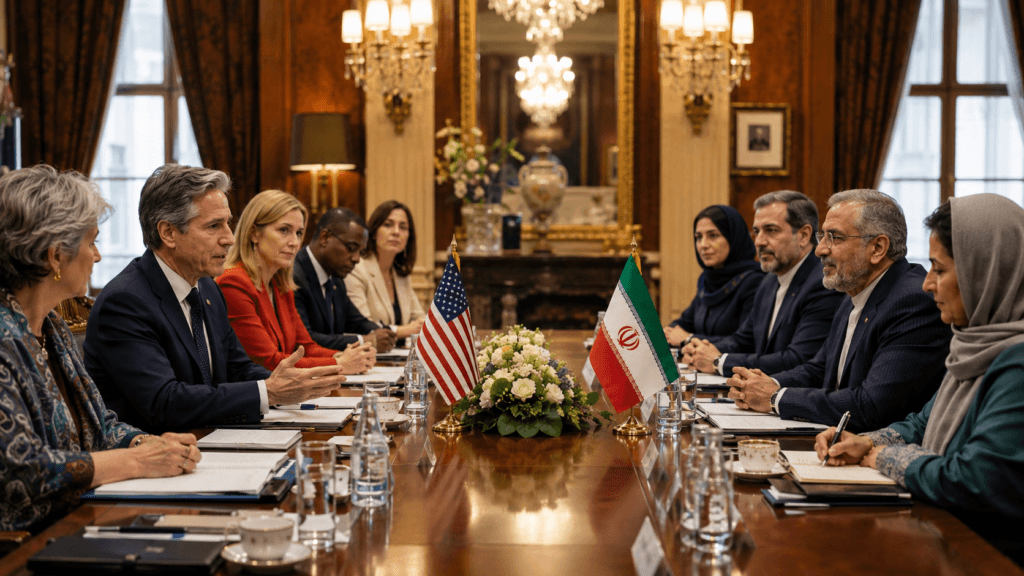
If both sides seem to agree that a ceasefire is the goal, why isn’t there already an agreement?
For many Americans, that’s a reasonable question.
The United States tends to view negotiations the same way it views business: establish the objective, work through the details, and get to a decision.
Iran often approaches negotiations differently.
The United States and Iran operate from very different cultural perspectives, particularly when it comes to time and relationships.
The United States is generally considered a low-context culture. Americans tend to see time as linear and limited. Progress is measured by movement. Deadlines matter. Efficiency matters. If a solution is available, the expectation is often to move toward it as quickly as possible.
Iran, however, comes from a much more high-context cultural tradition.
In high-context cultures, negotiations are not viewed purely as transactions. They are also opportunities to establish trust, evaluate intentions, and build relationships. The process itself carries meaning.
Time is often viewed differently as well.
What Americans may view as unnecessary delays, Iranians may view as careful consideration. Taking additional time is not always seen as an obstacle. In some cases, it may be viewed as a sign of patience, strategy, and respect for the relationship being built.
There is also a broader context to consider. Iran’s decisions are often tied to how it is perceived regionally and globally. Negotiations are not simply about reaching an agreement. They can also communicate strength, influence, and long-term intentions.
This doesn’t mean one side is right and the other is wrong.
It simply means they may be playing by very different cultural rules.
And when two cultures have different ideas about what negotiations are supposed to accomplish, reaching an agreement can take longer than either side expects.