


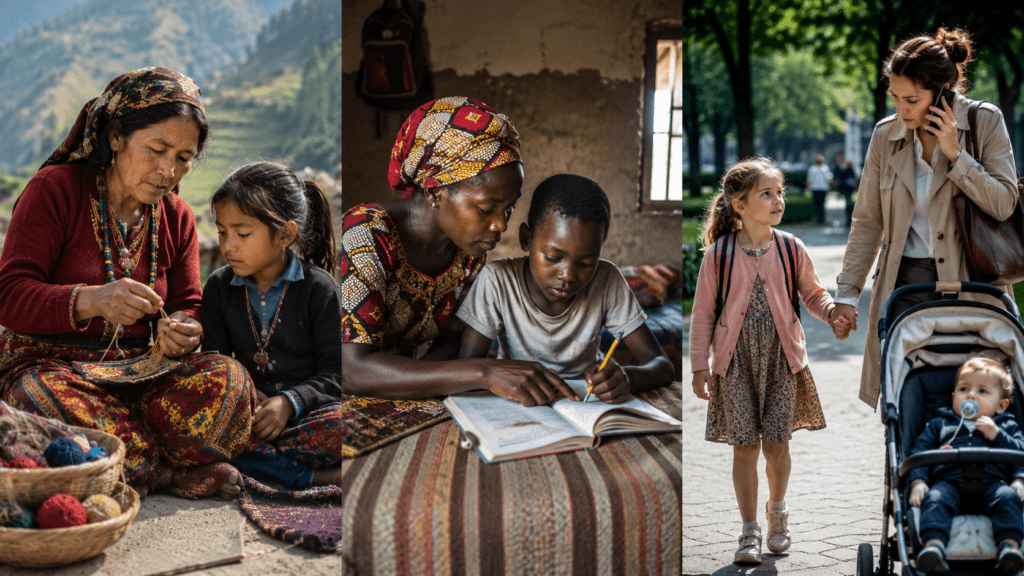
Wherever you go in the world, mothers tend to have one thing in common.
They’re doing far more than most people realize.
On any given day, they might be a caregiver, teacher, problem solver, chauffeur, cheerleader, and mediator.
Sometimes all before noon.
But while motherhood exists in every culture, the role itself can look surprisingly different depending on where you are in the world.
In many East Asian cultures, mothers have traditionally been viewed as matriarchs, serving as guiding forces within the family. Beyond caring for children, they often play a central role in passing down values, discipline, wisdom, and traditions from one generation to the next.
In many Indigenous cultures, motherhood is deeply connected to community and cultural preservation. Stories, language, customs, and traditions are often shared through mothers and extended family networks, helping keep cultural identities alive across generations.
In much of the Western world, the role of motherhood has evolved alongside changing expectations around work and family. Many mothers balance careers, parenting, household responsibilities, and countless unseen tasks all at once. One moment they’re leading a meeting. The next they’re helping with homework, driving to practice, or figuring out what’s for dinner.
The details may differ from culture to culture, but one thing becomes clear when you step back and look at the bigger picture.
Mothers are often carrying far more than anyone realizes.
Whether they’re preserving traditions, building communities, supporting families, advancing careers, or somehow managing all of those responsibilities at the same time, their influence reaches far beyond their own families.