


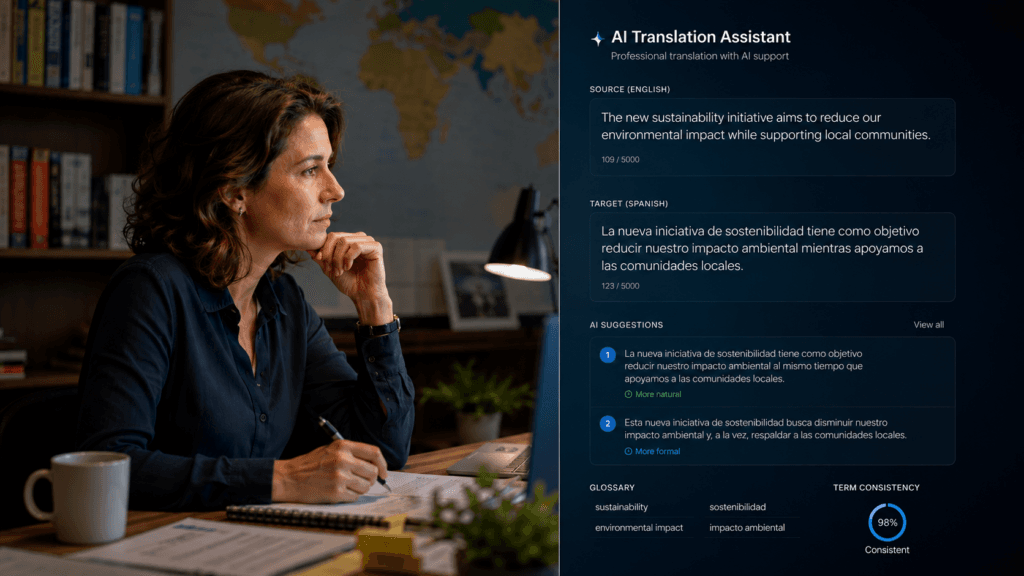
For decades, the translation industry followed a familiar model.
One linguist translated the content, while a second linguist reviewed it.
That second review acted as a quality control process, helping catch mistakes, improve fluency, and ensure the translation felt natural in the target language.
But AI is changing the details of that model quickly.
Today, many companies are replacing portions of the traditional workflow with AI-generated first-pass translations. The process is faster, less expensive, and in many cases, accurate enough to reduce the amount of human involvement required.
That shift is already reshaping the industry. The amount of human translation work available has been severely reduced, which is altering the role of the linguist entirely.
Because if AI can now handle a large portion of the initial translation process, the remaining human contribution has to become much more valuable.
Moving forward, average linguistic work will likely struggle to compete with AI-assisted workflows while highly skilled linguists will stand out by providing irreplaceable quality control.