


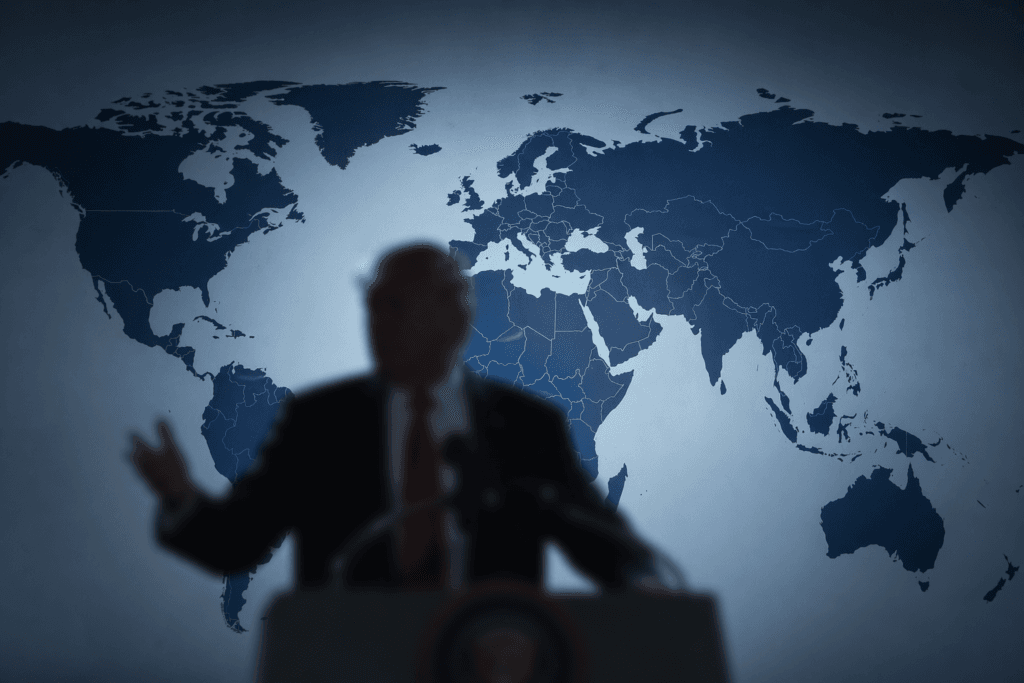
It’s no secret that Americans don’t rank highly when it comes to geographic knowledge.
For many people, what happens outside the United States feels distant and disconnected from daily life. Why know where Somalia or Egypt are on a map if it doesn’t directly affect you?
But that logic doesn’t apply at the highest level of leadership.
Especially not for the U.S. president.
Because when the president speaks, the audience isn’t just domestic.
It’s global.
And lately, that gap in basic global awareness has been on full display.
Referring to the Pope as if he belongs to Italy, rather than recognizing Vatican City as its own sovereign state.
At a dinner with Republican governors, repeatedly referring to “bricks” instead of “Brits.”
Misstating Puerto Rico’s relationship to the United States, despite it being a U.S. territory.
Standing in Alaska and suggesting a return “to the United States,” as if Alaska itself isn’t part of it.
These aren’t complex geopolitical misunderstandings.
They’re basic facts.
And when those facts are stated incorrectly on a global stage, they don’t just pass as harmless mistakes.
They get amplified.
Because outside the United States, these moments don’t exist in isolation. They’re clipped, shared, and repeated. Over time, they shape how American leadership – and the country itself – is perceived.
That’s where the impact becomes unavoidable.
Because the U.S. president is not just seen as an individual. They are seen as a representation of the country itself.
So when basic global facts are continuously misstated, it doesn’t just reflect poorly on one person.
It becomes the impression the rest of the world remembers.