


Easter arrives in many forms.
At its core, it marks renewal. In Christian tradition, it commemorates the resurrection of Christ. More broadly, it has long been tied to themes of new life, reflection, and the transition from winter into spring.
But how that meaning shows up can look completely different depending on where you are.
In the United States, Easter often leans bright and celebratory. Chocolate bunnies, pastel baskets, and egg hunts fill the day. It’s playful, familiar, and centered around gathering.
In Spain, the mood shifts. Semana Santa processions move slowly through the streets, accompanied by drums and candlelight. The focus turns inward, toward remembrance and tradition.
In Guatemala, entire streets are transformed with colorful carpets made from sawdust and flowers. They are carefully designed, then walked over hours later by processions. The beauty is temporary, but the act of creating it is part of the meaning.
In Greece, Easter begins in darkness and turns to light. At midnight, candles are passed from person to person as fireworks fill the sky. The moment feels less quiet and more electric, marking a shared sense of renewal.
In France, the story takes a lighter turn. Church bells are said to “fly to Rome” and return on Easter morning, bringing chocolate with them. Children search for sweets scattered through gardens.
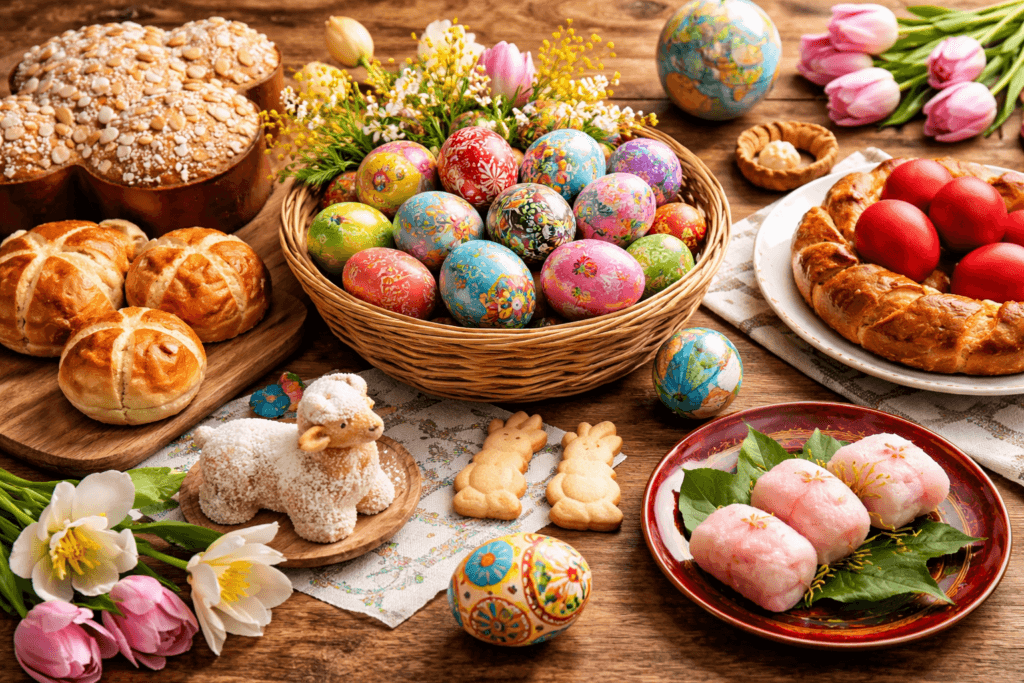
In parts of Eastern Europe, eggs are dyed and carefully decorated by hand, sometimes becoming small works of art. They’re shared, tapped together, and turned into a simple game to see whose egg remains uncracked.
As traditions move across cultures, they don’t stay the same. They adapt to the people and places that carry them.
In some places, Easter is quiet and reflective. In others, it’s loud, bright, and communal. In many, it’s both at once.
Underneath it all, though, the meaning holds steady.
A celebration of renewal. Of connection. Of new life.